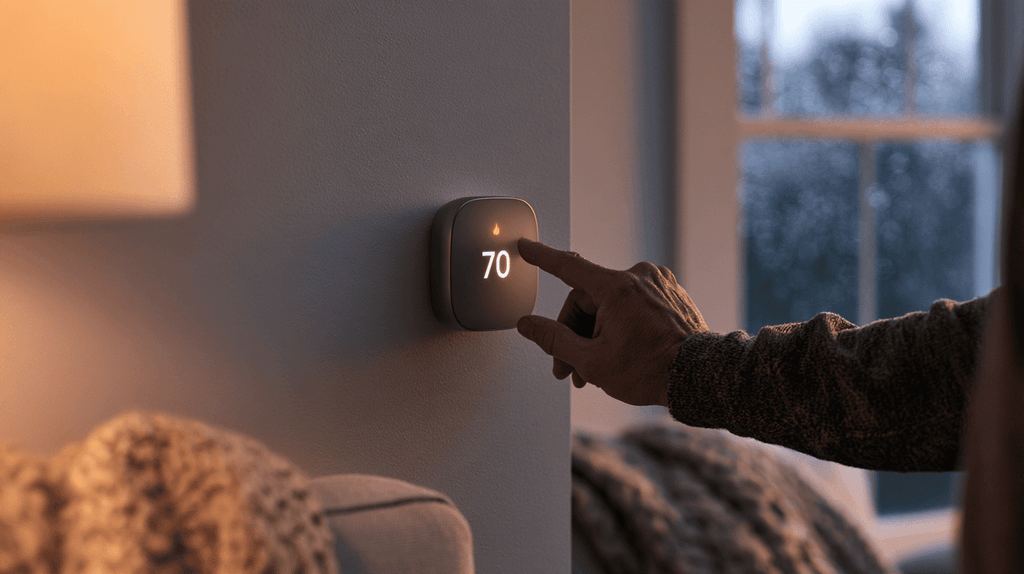
Aux heat is your heat pump’s automatic backup. It switches on by itself when the heat pump needs help, such as during a defrost cycle or a cold snap, and switches off once the heat pump catches up. Emergency heat is a manual setting that shuts the heat pump off completely and runs only the backup. Seeing “AUX” on the thermostat now and then is normal. Leaving “EM HEAT” on is not, because backup heat can cost two to four times more to run.
This guide is for homeowners in Gaithersburg, Rockville, Germantown, Silver Spring, Bethesda, and the rest of Montgomery and Frederick Counties who heat with a heat pump. That is roughly 1 in 5 Maryland homes, or about 420,000 households, according to the U.S. Energy Information Administration. We cover what each mode does, what is normal, what this winter’s El Niño forecast means for your system, what backup heat costs, and when to call a technician.
Why This Winter Is Defrost Weather
This winter will likely make your heat pump defrost more often than usual. NOAA’s Climate Prediction Center gives a greater than 90% chance of a very strong El Niño through fall and winter 2026–27. It also puts a 75% chance on a record-strength event for October through December.
For the Baltimore–Washington area, strong El Niño winters have generally run warmer than normal, based on National Weather Service analysis summarized by Cornell’s Northeast Regional Climate Center. They also tend to be wetter, with a “boom or bust” pattern for major snowstorms.
Mild and wet is exactly when heat pumps frost up fastest. Frost builds on the outdoor coil when temperatures sit between roughly 20°F and 45°F with high humidity. Expect more defrost cycles, more brief “AUX” readings, and a few sharp cold snaps after coastal storms.
Key Terms Worth Knowing
Five terms explain almost everything your thermostat displays in winter.
Air-Source Heat Pump
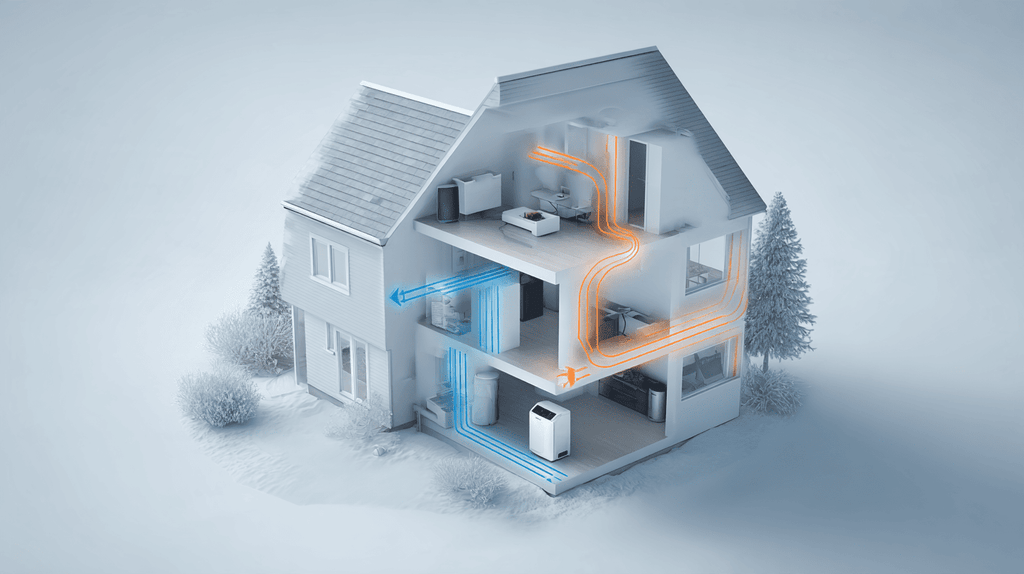
An air-source heat pump moves heat from outdoor air into your home instead of burning fuel. A properly installed unit can deliver two to four times more heat energy than the electricity it uses.
Auxiliary Heat (Aux Heat)
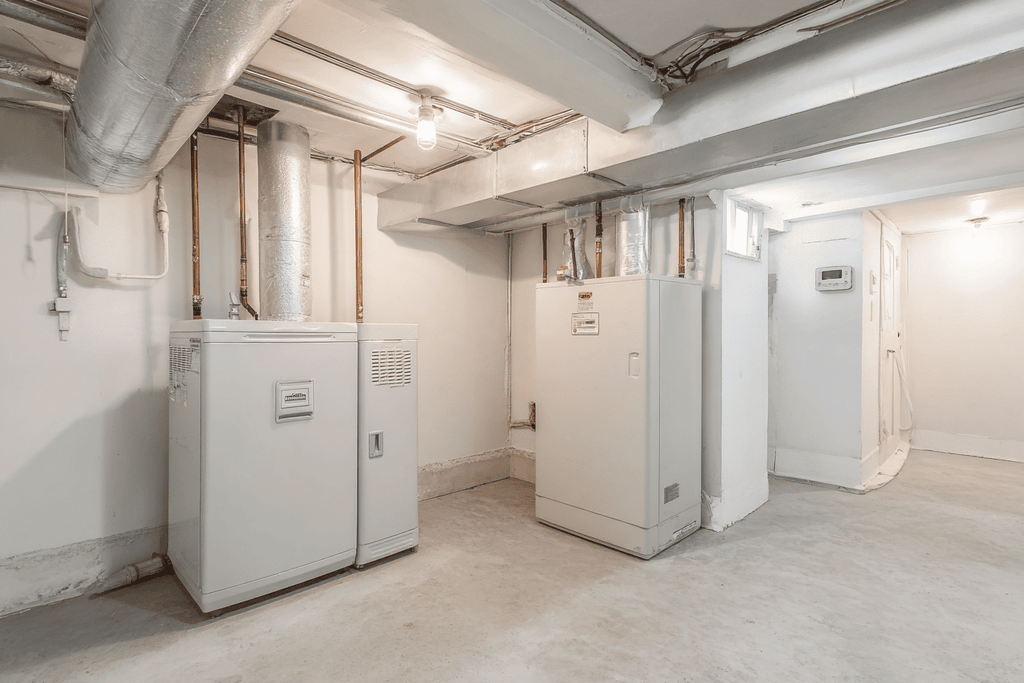
Auxiliary heat is the automatic backup, usually electric resistance heat strips in the indoor air handler. In a dual-fuel system, the backup is a gas furnace. The thermostat calls for it during defrost, during large temperature recoveries, or when outdoor temperatures drop below what the heat pump can handle alone.
Emergency Heat (EM Heat)
Emergency heat is a manual thermostat setting that locks out the heat pump and runs only the backup source. It exists for one situation: the outdoor unit has failed or is physically damaged, and you need heat until a technician arrives.
Defrost Cycle
A defrost cycle briefly reverses the heat pump into cooling mode to warm and melt frost off the outdoor coil. Most systems run one for 2 to 10 minutes, every 30 to 90 minutes in frosty conditions, and backup heat often runs at the same time to keep indoor air warm.
Balance Point and Cold-Climate Heat Pump
The balance point is the outdoor temperature where your heat pump’s output equals your home’s heat loss. Below it, backup heat makes up the difference. A cold-climate heat pump lowers that point. To earn the ENERGY STAR cold-climate designation, a unit must keep 70% of its heating capacity and a 1.75 COP (coefficient of performance) at 5°F.
What’s Normal and What Isn’t
Most winter heat pump behavior that worries homeowners is normal. The difference between normal and a problem usually comes down to how long something lasts.
Normal in winter
• Steam or a cloud of vapor rising from the outdoor unit during or right after defrost
• A whoosh or click as the reversing valve shifts, with the outdoor fan stopping for a few minutes
• Light, even frost on the coil that clears within one defrost cycle
• “AUX” showing briefly during defrost, or after you raise the thermostat several degrees
• Supply air that feels warm rather than hot, because heat pumps deliver lower-temperature air for longer run times than a furnace
Worth a service call
• A solid block of ice on the coil, top panel, or fan that stays through several cycles
• Defrost cycles lasting 15 minutes or longer
• “AUX” showing constantly when it is above freezing outside
• An outdoor unit that is silent while the thermostat calls for heat
• A heating bill that jumps sharply with no change in weather or thermostat settings
What Backup Heat Actually Costs
Backup heat costs more because electric resistance heat has a COP of 1, while a heat pump runs at a COP of 2 to 4. DOE puts resistance heating at about 3,400 Btu per kWh. The same kWh through a working heat pump delivers roughly 6,800 to 13,600 Btu.
| Mode | How it starts | Heat source | Efficiency (COP) | What it means for cost |
|---|---|---|---|---|
| Heat pump only | Automatic | Outdoor heat moved indoors | 2.0–4.0 | Lowest cost per hour of heat |
| Auxiliary heat | Automatic | Heat strips or gas furnace | 1.0 for strips | Normal in short bursts; costly if constant |
| Emergency heat | Manual | Backup only, heat pump off | 1.0 for strips | Two to four times the cost of heat pump mode |
A typical 10 kW heat strip draws 10 kWh for every hour it runs. If emergency heat is left on through a cold week, that difference shows up on the next Pepco or Potomac Edison bill.
Comparing Your Backup Heat Options
The right backup depends on your home, fuel access, and how much you value low operating cost versus simplicity. All three setups below are common in Montgomery County homes, and each has real trade-offs.
| Criteria | Standard heat pump + electric strips | Dual fuel (heat pump + gas furnace) | Cold-climate variable-speed heat pump + strips |
|---|---|---|---|
| Backup source | Electric resistance strips | Natural gas or propane furnace | Electric strips, rarely needed |
| Performance near 5°F | Leans heavily on strips | Furnace carries the load | Holds at least 70% of rated capacity |
| Cost when backup runs | Highest | Moderate, depends on gas prices | Lowest, because backup runs least |
| Needs a gas line | No | Yes, plus venting and CO safety checks | No |
| Upfront cost | Lowest | Highest, two heating systems | Mid to high |
| Best fit | Mild-winter homes, smaller footprints | Homes with existing gas and older ducts | Homeowners planning all-electric or long-term ownership |
If you already have gas, our post on hybrid heating advantages explains how dual fuel decides when to switch sources.
Five Habits That Keep Aux Heat From Running Up Your Bill
The cheapest heat in a heat pump home comes from letting the heat pump do the work. These five habits keep the backup in reserve.
1. Avoid big setbacks. Dropping the thermostat 8°F overnight forces a large morning recovery, which calls for aux heat. Keep setbacks to 2°F to 4°F, or use a thermostat with adaptive recovery.
2. Never use emergency heat for “faster” heat. It does not heat the house faster. It only heats it more expensively.
3. Keep 2 feet of clearance around the outdoor unit. Clear snow, leaves, and mulch, and make sure no gutter drips onto the top of the unit.
4. Change filters on schedule. Restricted airflow lowers output and triggers backup heat sooner. Check monthly in peak season and replace as the filter maker recommends.
5. Ask about an aux heat lockout. DOE notes that energy codes require controls preventing unnecessary heat strip operation. A technician can set the outdoor temperature above which strips cannot run.
When to Call a Technician
Call when ice persists, aux heat runs nonstop above freezing, or the outdoor unit stops running. Those are signs of a failed defrost sensor or control board, a low refrigerant charge, a bad reversing valve, or a seized fan motor.
Switch to emergency heat only as a stopgap while you wait, then schedule heat pump repair. If your system uses a gas furnace as backup, make sure your carbon monoxide detectors are working before relying on it heavily.
If Your Heat Pump Is Already Older
A heat pump past 10 to 15 years, or one that leans on aux heat even in mild weather, is worth a repair-versus-replace conversation before the coldest weeks arrive. Our guide on whether your heat pump is worth fixing walks through the decision.
Budget with current incentives in mind. The federal 25C heat pump tax credit of up to $2,000 ended for systems placed in service after December 31, 2025. Maryland’s EmPOWER utility programs still offer heat pump rebates, so check current Pepco or Potomac Edison amounts and ask about financing options. A residential service agreement keeps a fall check on the calendar so defrost controls and heat strips are tested before the season starts.
Frequently Asked Questions
Is it bad if my thermostat says “aux heat”?
No. Brief aux heat during defrost cycles, cold mornings, or after raising the thermostat several degrees is normal. It becomes a concern when aux heat runs continuously while outdoor temperatures are above freezing.
When should I turn on emergency heat?
Only when the outdoor unit has failed, is iced over solid, or has been damaged, and you need heat until a technician arrives. Emergency heat runs only the backup source, so it can cost two to four times more to operate.
Why is steam coming out of my heat pump in winter?
Steam means the defrost cycle is working. The unit briefly warms the outdoor coil to melt frost, and the melting water vaporizes in cold air. It typically lasts 2 to 10 minutes and is not smoke or a fire hazard.
Do heat pumps work well in Maryland winters?
Yes. Modern cold-climate heat pumps keep at least 70% of their capacity at 5°F, well below typical Montgomery County winter lows. Proper sizing, ductwork, and defrost controls matter more than outdoor temperature for most homes.
How much more does aux heat cost than heat pump mode?
Electric resistance aux heat has a COP of 1, while heat pump mode runs at a COP of 2 to 4. That means each hour of strip heat costs roughly two to four times more than the same heat delivered by the heat pump.
The Bottom Line
“AUX” on your thermostat is your heat pump asking for help, and short bursts are normal. “EM HEAT” is a manual override meant for breakdowns only. With a mild, wet El Niño winter forecast, expect more defrost cycles, keep the outdoor unit clear, and call when ice or constant aux heat sticks around.