Yes, a gas furnace can leak carbon monoxide. A healthy furnace sends CO up the flue, but a cracked heat exchanger, a blocked vent, or poor combustion can push it into your living space. Working CO alarms on every level and a yearly combustion safety check are the two best protections.
This guide is for homeowners in Gaithersburg, Rockville, Germantown, Silver Spring, Bethesda, and the rest of Montgomery and Frederick Counties who heat with gas, propane, or oil. We cover how furnaces produce CO, the warning signs, Maryland and Montgomery County alarm rules, alarm options, what a red tag means, and what to do if your alarm sounds.
Why Carbon Monoxide Matters More This Season
Carbon monoxide risk peaks between November and February, when furnaces run hardest and windows stay shut. The CPSC reports that more than half of non-fire CO deaths happen in those four months.
Maryland just saw its worst season on record. The Maryland Department of Health counted 342 CO-related emergency room and urgent care visits in the 2025–26 cold season, a 95% jump from the year before.
Nationally, the CDC estimates CO poisoning causes more than 100,000 emergency room visits, over 14,000 hospitalizations, and more than 400 deaths each year.
Key Terms Worth Knowing
Four terms explain how a furnace keeps CO out of your home, and how that can fail.
Carbon Monoxide (CO)
Carbon monoxide is a colorless, odorless gas created when fuel burns without enough oxygen. Natural gas, propane, oil, wood, and gasoline all produce it. It is measured in parts per million (ppm), and you cannot see, smell, or taste it.
Heat Exchanger
The heat exchanger is the metal chamber that separates burning gas from the air blown through your ducts. Years of heating and cooling can crack it. A crack can let combustion gases, including CO, mix with the air you breathe.
Flue and Venting
The flue is the pipe or chimney that carries exhaust outside. Blockages from snow, leaves, or nests, or disconnected and rusted sections, can push exhaust back into the house. That reverse flow is called backdrafting.
Red Tag
A red tag is a warning label placed on a gas appliance that is unsafe to operate. A utility worker or licensed technician applies it, and the appliance must stay off until it is repaired or replaced and cleared.
How a Furnace Produces Carbon Monoxide
Every gas furnace produces some CO as part of combustion. Problems start when the furnace makes too much, or when the exhaust has a path into your living space. These are the most common causes we find on service calls:
• Cracked heat exchanger: Most common in furnaces older than 15 years, or ones that have overheated from dirty filters and poor airflow
• Blocked or disconnected vent: Snow drifts over sidewall vents, bird nests, or flue pipes that have separated at a joint
• Poor combustion: Dirty burners, the wrong gas pressure, or not enough combustion air, which raise CO in the exhaust
• Backdrafting: Exhaust fans and tight construction pulling flue gases back down the chimney instead of up
A fall furnace tune-up catches most of these before the coldest weeks. If you skipped it this year, it is not too late to schedule.
Other CO Sources During the Holidays
Your furnace is not the only CO source in a Maryland home in November and December. Gas ranges and ovens running for hours on Thanksgiving, gas water heaters, fireplaces, and cars warming up in an attached garage can all raise indoor CO.
Winter storms add a bigger risk. The CPSC reports that nearly 100 people die each year from portable generator CO. Run generators outdoors only, at least 20 feet from doors and windows.
Warning Signs of Carbon Monoxide
Carbon monoxide symptoms feel like the flu, which is why they are easy to miss. The CDC lists headache, dizziness, weakness, upset stomach, vomiting, chest pain, and confusion as the most common signs.
Signs in your household
• Several people, or pets, feel sick at the same time
• Symptoms ease when you leave home and return when you come back
• Headaches that are worse in the morning or when the heat is running
Signs at the furnace
• Yellow or flickering burner flames instead of a steady blue flame
• Soot or scorch marks around the furnace door or burner area
• Heavy condensation on windows near gas appliances
• A furnace that runs constantly but never seems to heat the house
These signs mean you should get a technician out. They do not replace a CO alarm.
Maryland and Montgomery County CO Alarm Rules
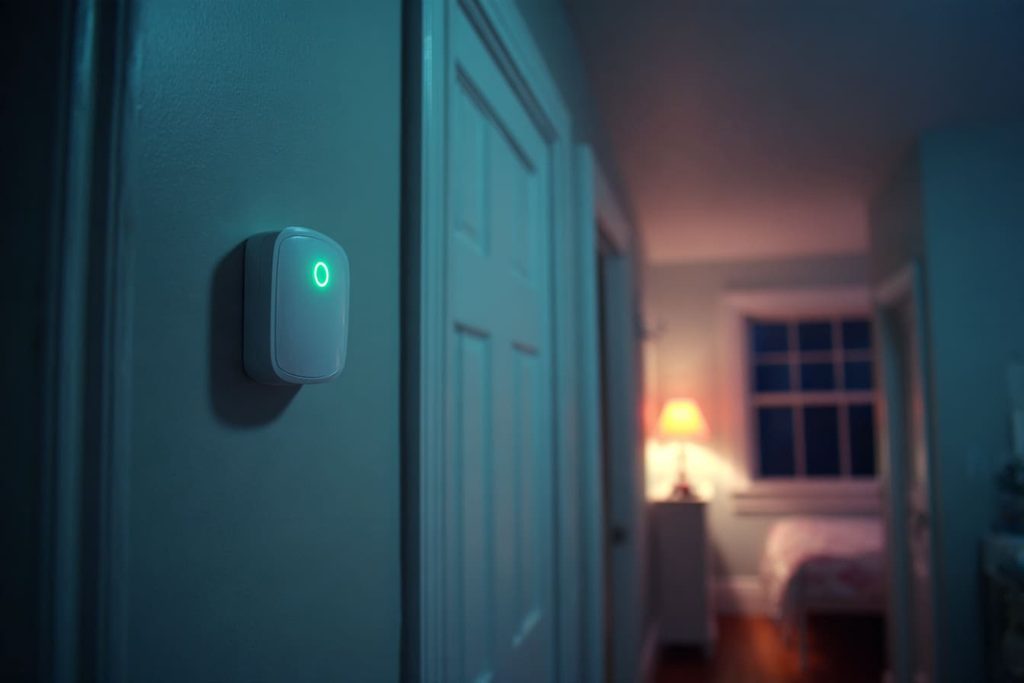
Maryland and Montgomery County both require CO alarms in many homes that burn fuel. Since January 1, 2008, Maryland law has required alarms in new homes that rely on fossil fuels for heat, hot water, or clothes drying. Rental units were added in 2018.
Montgomery County goes further. Its Bill 23-18 requires owners of occupied single-family homes, two-unit homes, and townhouses with a fuel-burning appliance or attached garage to install CO detection, whatever the home’s age.
Even where the law does not apply, the CPSC recommends battery-powered or battery-backup alarms on every level and outside each sleeping area.
How CO Alarms Decide When to Sound
Standard CO alarms are designed to stay quiet at low levels and sound only when CO builds to a dangerous point over time. Under UL 2034, the U.S. standard for home CO alarms, the timing works like this:
| CO level | Alarm must sound within | What it means |
|---|---|---|
| Under 30 ppm | Should not sound | Low-level exposure goes unreported |
| 70 ppm | 60–240 minutes | Sustained exposure; headaches likely |
| 150 ppm | 10–50 minutes | Dangerous within the hour |
| 400 ppm | 4–15 minutes | Life-threatening; leave immediately |
That design cuts false alarms, but it means a slowly leaking furnace may never set off a standard alarm. That gap is why the next section compares alarm types.
Comparing Your CO Alarm Options
The right CO alarm setup depends on your home’s layout, wiring, and how much early warning you want. Every option below has trade-offs, and many homes combine two.
| Criteria | Battery-only (10-year sealed) | Plug-in with battery backup | Hardwired, interconnected | Low-level CO monitor |
|---|---|---|---|---|
| Works in a power outage | Yes | Yes, on backup battery | Yes, if it has battery backup | Yes, most models |
| Alerts the whole house | No, sounds locally | No, sounds locally | Yes, all alarms sound together | No, sounds locally |
| Detects low-level CO | No, UL 2034 thresholds | No, UL 2034 thresholds | No, UL 2034 thresholds | Yes, reads below 30 ppm |
| Install effort | Mount anywhere | Needs an outlet at the right height | Electrician or new construction | Mount or set on a shelf |
| Best fit | Quick coverage on every level | Rooms with outlets near bedrooms | Larger homes and full code compliance | Households with infants, seniors, or heart conditions |
A low-level monitor is a supplement, not a replacement. Keep UL 2034 alarms on every level, and check each alarm’s replace-by date, since most last five to seven years.
What a Red-Tagged Furnace Means
A red tag means a technician or utility worker found an unsafe condition, and the furnace must stay off until it is fixed. Common reasons include a cracked heat exchanger, a gas leak, high CO in the exhaust, or a failed vent.
If your furnace is red-tagged, follow these steps:
1. Do not restart it. Never remove the tag or relight the furnace yourself.
2. Ask what was found. Request the CO reading, photos or camera footage, and the exact failure in writing.
3. Get a second opinion before replacing. Rod Miller offers free second opinions on diagnoses made by other companies.
4. Weigh repair against replacement. Heat exchangers are sometimes covered by manufacturer warranties. On older furnaces, replacement is often the safer long-term choice.
Our furnace repair guide explains what to expect from that decision.
What to Do If Your CO Alarm Sounds
Treat every CO alarm as real until a professional proves otherwise. Do not try to find the source yourself.
1. Get everyone, including pets, outside to fresh air right away.
2. Call 911 from outside, and seek medical care if anyone has symptoms.
3. Stay out until firefighters say the home is safe to re-enter.
4. Keep fuel-burning appliances off until a technician finds and fixes the cause.

Frequently Asked Questions
Can a furnace leak carbon monoxide when it is turned off?
A furnace that is not firing does not produce CO. However, a water heater sharing the same flue, or a blocked chimney, can still send CO into the home. Test your alarms monthly, even when the heat is off.
Do heat pumps produce carbon monoxide?
No. An all-electric heat pump burns no fuel, so it cannot create CO. Homes with a dual-fuel system, a gas water heater, a gas range, or an attached garage still need CO alarms.
Where should I put a carbon monoxide detector?
Place one outside each sleeping area and on every level, including the basement. Follow the manufacturer’s height and distance guidance, and keep alarms clear of the furnace itself to avoid nuisance readings.
How often should a gas furnace be checked for carbon monoxide?
Once a year, before the heating season. A full check includes a combustion analysis, a heat exchanger inspection, and a vent and flue check. A residential service agreement puts that visit on the calendar automatically.
Can a cracked heat exchanger be repaired?
A cracked heat exchanger cannot be safely patched. It must be replaced, or the whole furnace replaced. On a furnace under 10 years old, the part may be under warranty, so check before deciding.
The Bottom Line
A gas furnace can leak carbon monoxide, and Maryland just had its worst CO season on record. Put UL 2034 alarms on every level, have the furnace’s combustion and venting checked every year, and never restart a red-tagged furnace without a fix or a second opinion.