Your home is getting smarter. Lights respond to voice commands, door locks operate from your phone, and security cameras send alerts while you’re at the grocery store.
But there’s one system that touches every room, runs longer than any other appliance, and accounts for the largest share of your energy bill — and it’s often the last one homeowners think to connect: the HVAC system.
Modern heating and cooling equipment isn’t just mechanically more capable than what it replaces. It’s designed to communicate — with your thermostat, your phone, your other devices, and even the power grid. When that integration is set up correctly, the results go well beyond convenience.
This guide explains what smart HVAC integration actually means, how it works in practice, and what Maryland homeowners should know before making a decision.
Here’s what we’ll cover:
- What makes an HVAC system “smart” and how it connects to your home
- The real benefits beyond basic remote control
- Common compatibility issues that cause problems
- How to choose the right integration for your home
- What’s coming next in residential HVAC automation

What “Smart” HVAC Actually Means
The term gets used loosely, so it’s worth being precise.
A traditional HVAC system is reactive. The thermostat detects that a room has gotten too warm or too cold, sends a signal, and the equipment responds. It waits for a problem before acting.
A smart HVAC system is predictive. It uses occupancy sensors, geofencing, local weather data, and learned household routines to adjust conditions before discomfort sets in. It doesn’t wait for the temperature to drift — it acts ahead of it.
In practical terms, a genuinely integrated system does things a conventional one cannot:
- Senses occupancy room by room — not just whether someone is home, but where people are and when spaces are being used.
- Learns your household’s actual patterns — rather than executing a schedule you programmed once and forgot.
- Diagnoses itself — flagging declining efficiency, clogged filters, or components drifting out of spec before they become failures.
- Coordinates with the energy grid — pre-conditioning your home before peak rate windows and shifting load to off-peak hours.
- Communicates with other systems — window shades, ventilation, air quality monitors, and increasingly, EV chargers and battery storage.
ENERGY STAR estimates that properly configured smart HVAC systems reduce heating and cooling costs by roughly 8–15%. In Maryland’s climate — where a single spring week can swing 30 degrees and summer humidity adds significant cooling load — those savings compound quickly.
How HVAC Systems Connect to Smart Home Platforms
Smart HVAC integration happens through several different layers, and understanding which layer you’re working with matters.
The thermostat is the most visible control point. Modern smart thermostats — from brands like Ecobee, Nest, and Honeywell Home — connect to your Wi-Fi and can be controlled remotely, programmed by schedule, or set to learn automatically. They also provide energy reports and can integrate with voice assistants like Alexa and Google Home.
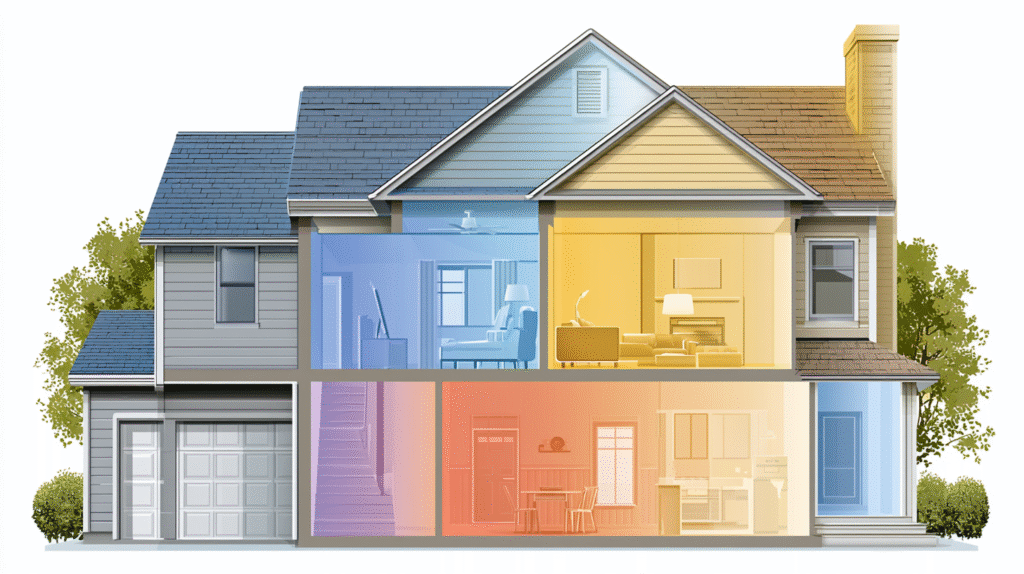
Zone controls go further, managing individual areas of your home independently. A properly zoned system can condition the upstairs bedrooms in the morning and shift focus to main living areas in the afternoon, without running the entire system at full capacity all day.
Variable-speed equipment is the hardware side of smart integration. Traditional HVAC equipment runs at one speed: full blast. Variable-speed compressors and air handlers modulate output continuously, matching actual demand instead of cycling on and off. This is what makes precise comfort control and real energy efficiency possible — the thermostat intelligence is only as useful as the equipment’s ability to respond.
Platform integration connects everything. Systems compatible with platforms like Apple HomeKit, Google Home, Amazon Alexa, or SmartThings can coordinate with other devices in the home — so that when your geofencing detects you’re 20 minutes away, the house starts conditioning, the lights adjust, and the locks are ready.

The Benefits That Actually Matter Day to Day
Most coverage of smart HVAC focuses on novelty — controlling your system from your phone, asking a voice assistant to adjust the temperature. These are real capabilities. They’re also the least important part of what a well-integrated system delivers.
Here’s what actually changes how a home functions:
Vacation and remote protection. A smart system monitors your home continuously while you’re away, sending alerts if the temperature or humidity crosses a threshold. A failed compressor in July. A humidity spike that risks mold or damage to wood flooring. A system that shut down overnight in January. For frequent travelers and second-home owners, this capability alone often justifies the full upgrade.
Solving the upstairs/downstairs problem. In a two-story Maryland home, it’s common for the upper level to run 8–10°F warmer than the main floor in summer. Multi-sensor smart zoning addresses this without rebuilding ductwork. It’s the most consistently impactful upgrade we install in older homes.
Predictive maintenance. Smart systems track performance data over time and can flag when a component is trending toward failure — before it actually fails. This means fewer emergency calls during heat waves, longer equipment life, and lower lifetime operating costs. A system that flags a declining capacitor in May costs far less to address than one that fails in August.
Indoor air quality management. Integrated systems can coordinate with air quality sensors to adjust filtration, humidity, and ventilation automatically — responding to high CO2 levels, elevated allergens, or outdoor air quality events like wildfire smoke. After the 2023 Canadian wildfire season affected Mid-Atlantic air quality for days at a time, this feature moved from convenient to genuinely important.

Compatibility Issues Most Contractors Won’t Mention
Smart integration is not a thermostat swap. The interface is only as good as what it’s connected to — and many homes in our service area have infrastructure that needs attention before integration delivers its full value.
The C-wire problem. Smart thermostats require continuous low-voltage power to maintain their connection and run sensors. Many older Maryland homes — particularly in Chevy Chase, Kensington, Rockville, and Silver Spring — were wired for conventional thermostats that don’t have a common (C) wire. Without one, smart thermostats either won’t function reliably or will pull power from the equipment itself, causing short-cycling and control board wear.
Equipment compatibility. Variable-speed equipment and zoning systems require specific communication protocols. Many retail smart thermostats aren’t designed to work with them correctly. A thermostat that’s technically “compatible” with your system may still underutilize its capabilities or, worse, actively interfere with its operation.
Ductwork limitations. No amount of smart control can compensate for a duct system that leaks 20–30% of conditioned air before it reaches the living space. Smart integration reveals ductwork problems more clearly than it resolves them. If your ducts haven’t been evaluated, that assessment should happen before — not after — a control upgrade.
We see the consequences regularly: premium smart equipment installed in configurations that deliver less comfort than a basic mechanical thermostat would have. Getting the infrastructure ready for integration is not optional — it’s where the value lives.
Choosing the Right Integration for Your Home
Not every home needs the same level of integration, and the right answer depends on your current equipment, your home’s age and construction, and what you’re actually trying to solve.
If your system is under 10 years old and in good condition, a smart thermostat with remote monitoring and scheduling may be a straightforward, high-value upgrade — assuming the wiring supports it.
If your system is 10–15 years old and you have comfort complaints — uneven temperatures, humidity issues, high bills — the better investment may be a full evaluation before adding any smart controls. Integrating automation into an underperforming system doesn’t fix the system; it just gives you better visibility into a problem that still needs addressing.
If your system is 15+ years old, or if you’re planning a significant renovation, the strategic opportunity is now. New variable-speed equipment with built-in smart capabilities — specified correctly for your home and installed with the right controls infrastructure — will outperform a patched older system with smart controls bolted on. And it will do so for the next 15–20 years.
Maryland utility companies are also moving toward time-of-use pricing, where electricity costs more during peak demand hours. A system that can pre-condition your home before those windows — and shift load intelligently — will provide increasing financial benefit as that pricing structure becomes standard.
What’s Coming Next
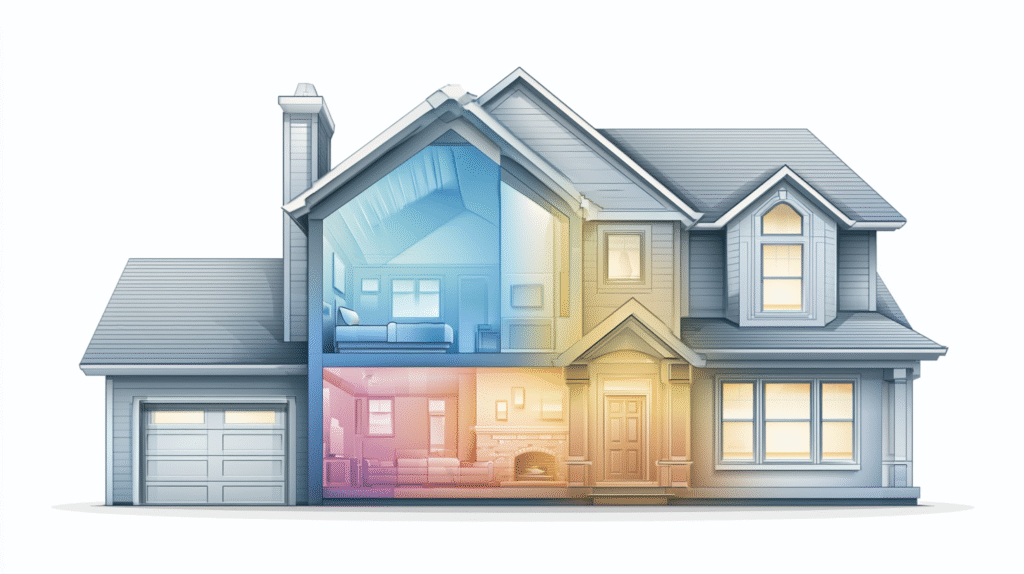
Smart HVAC integration is still in relatively early stages for most residential installations, and the trajectory is clear:
- Whole-home energy orchestration. HVAC will increasingly coordinate with EV chargers, home batteries, and solar panels to optimize total household energy consumption. The heating and cooling system — already the largest electrical load in most homes — becomes the primary load manager.
- Health-driven automation. Systems will respond directly to air quality data, adjusting filtration, ventilation, and humidity in real time based on occupancy, outdoor conditions, and indoor pollutants.
- Predictive grid coordination. As utilities offer more sophisticated demand response programs, smart HVAC systems will participate automatically — pre-cooling before grid stress events and reducing load when the grid needs relief, in exchange for lower rates.
Homes that are ready for this — with properly sized equipment, quality ductwork, and controls infrastructure that can support future capabilities — will handle the transition without costly retrofits. Homes that aren’t will be playing catch-up.

A Note on Who Installs This
Smart home integration has attracted a lot of companies that weren’t HVAC contractors last year. Large multi-trade firms bundle smart home packages with electrical, security, and plumbing services — and their technicians often work against commission-based sales quotas. The structural pressure to recommend equipment a home doesn’t need, or integrations that don’t fit it, is real.
Our technicians don’t work on commission. We do one thing: HVAC. When we recommend an integration, it’s because it fits the system, the home, and the goals. When we recommend waiting — or starting with an assessment rather than an installation — it’s because that’s the honest answer.
Rod Miller has been serving Maryland homeowners for over 50 years, because that model — honest recommendations, no shortcuts — tends to produce customers who stay customers.
Ready to See What Your System Can Do?
Smart HVAC integration isn’t a single product — it’s a different way of running your home. The right starting point is understanding where your current system stands and what it would take to get the most from it.
Schedule an assessment with one of our technicians. You’ll get a clear-eyed view of your current system’s capabilities, what’s worth upgrading now versus later, and what integration options actually fit your home. No commissions. No quotas. Request service today.

Frequently Asked Questions
Can I add smart controls to my existing HVAC system?
Often, yes — but it depends on your equipment’s age, wiring, and capabilities. A technician can assess what your current system supports and whether any infrastructure updates (like adding a C-wire) are needed first.
Do I need a whole-home automation platform, or can I just upgrade the thermostat?
A smart thermostat alone delivers real value — scheduling, remote control, energy data. A full automation platform adds coordination with other devices and broader control, but it’s not required to benefit from smart HVAC. Start with what solves your biggest problem.
What’s the difference between a smart thermostat and a smart HVAC system?
A smart thermostat is a control interface. A smart HVAC system is equipment — variable-speed compressors, communicating air handlers, sensor-based zoning — that can respond precisely to that interface. The thermostat is only as useful as the equipment’s ability to act on its instructions.
Will smart integration lower my energy bills?
Properly configured smart systems typically reduce heating and cooling costs by 8–15%, according to ENERGY STAR. The actual savings depend on your home’s current efficiency, how the system is configured, and whether the underlying equipment and ductwork are in good condition.