The storm rolled through fast last July. The kind Maryland summers are famous for.
By morning, the sky was clear and the air was thick with humidity. You walked downstairs, reached for the thermostat, and nothing happened. The AC was dead. No hum, no airflow, no cool air. Just silence and a house that was already starting to heat up. At Rod Miller HVAC, we hear this story every summer and in most cases, the cause is not a dramatic lightning bolt through the roof. It is something less visible and much more common.
For thousands of Maryland homeowners, that moment happens. And knowing what causes it and how to prevent it can save you thousands of dollars and a very uncomfortable week.
The Hidden Threat: Surges Do Not Need to Hit Your House Directly
Most people picture a lightning strike as a direct hit a bolt from the sky straight into their roof or yard.
But that is not how most surge damage works.
When lightning strikes a power line down the street, or even a transformer several blocks away, it sends a massive wave of excess voltage traveling through the grid. That wave reaches your home through the same lines that power your refrigerator, your lights, and your air conditioner.
Maryland averages 30 to 40 thunderstorm days per year. The Chesapeake Bay region sees some of the most active storm activity on the East Coast. That means your HVAC system faces dozens of potential surge events every single summer and that does not count the smaller spikes caused by utility switching, nearby industrial equipment, or even large appliances cycling on and off inside your own home.
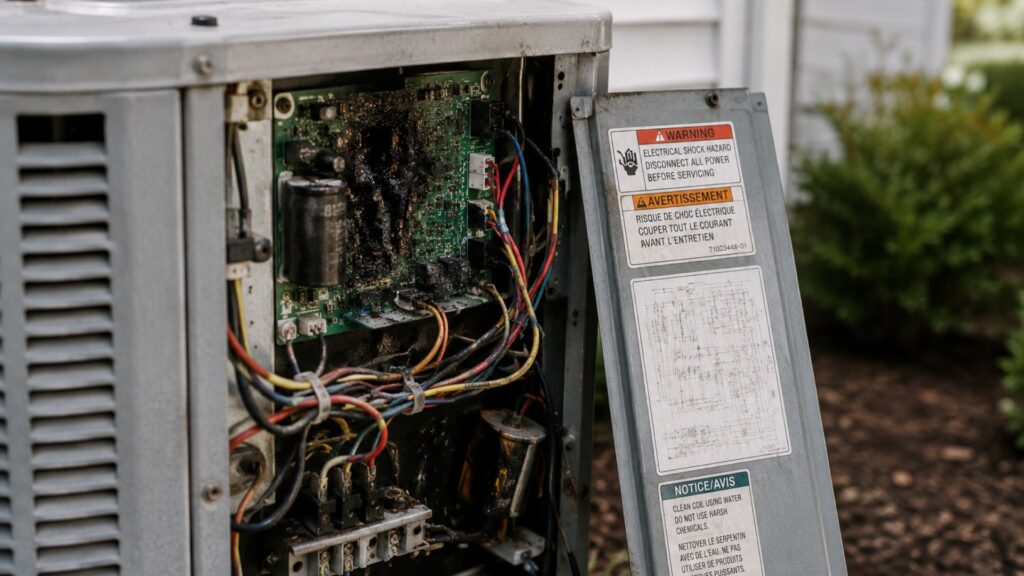
Surge-Damaged AC Control Board Close-Up
What a Power Surge Actually Does to Your AC
Your air conditioner is not just a mechanical system anymore. Modern AC units are packed with sensitive electronics that monitor temperatures, manage efficiency, and control every stage of the cooling cycle.
When a surge hits, those electronics absorb voltage they were never designed to handle.
Here is what typically fails and what it costs to fix:
Control board – This is the “brain” of your system. It manages the communication between your thermostat, your compressor, and your fan motors. A surge can wipe it out instantly. Replacement typically costs $600 to $1,200, not counting labor.
Capacitors – These components give your compressor and fan motors the initial jolt of electricity they need to start up. Surge damage here often causes the outdoor unit to hum but not run. Replacement runs $150 to $400.
Compressor – This is the most expensive component in your entire system. It pressurizes the refrigerant that makes cooling possible. Surge damage to the compressor often means the unit is not worth repairing. Replacement costs $1,500 to $4,000 or more, and in older systems, it frequently leads to a full replacement instead.
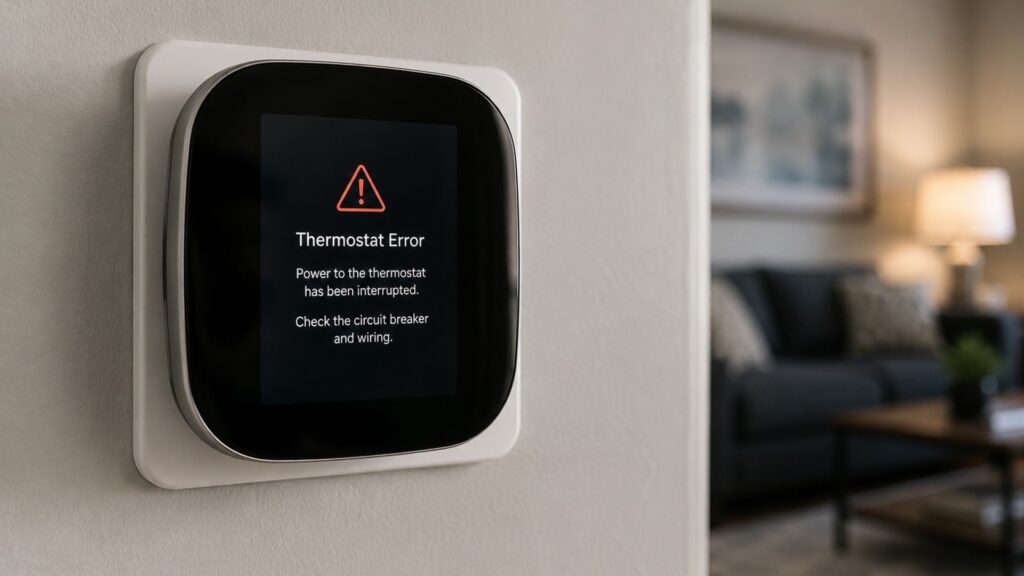
Thermostat and communication wiring Smart thermostats and modern zone controls are just as vulnerable as the outdoor unit. A fried thermostat adds $150 to $500 to the damage.
One surge event can take out multiple components at once. A homeowner who calls for “AC repair” after a storm may find out they are looking at $2,000 or more in damage or a system that cannot be repaired at all.
The Micro-Surge Reality Most Homeowners Miss
A catastrophic lightning strike gets attention. But the quieter threat is the one that actually causes more total damage over time.
Every time a large appliance, a refrigerator compressor, a washer motor, a garage door opener cycles on in your home, it creates a tiny voltage spike on your electrical circuit. These micro-surges are small, but they are constant.
The sensitive electronics inside your AC control board face the same reality. Micro-surges slowly degrade circuit boards and capacitors, shortening the life of your system even when no single event causes obvious damage. A system that should last 15 years may start failing at 10 and the cause is almost impossible to identify after the fact.
Think of it like water dripping onto stone. Each drop does almost nothing. But over months and years, the stone wears away
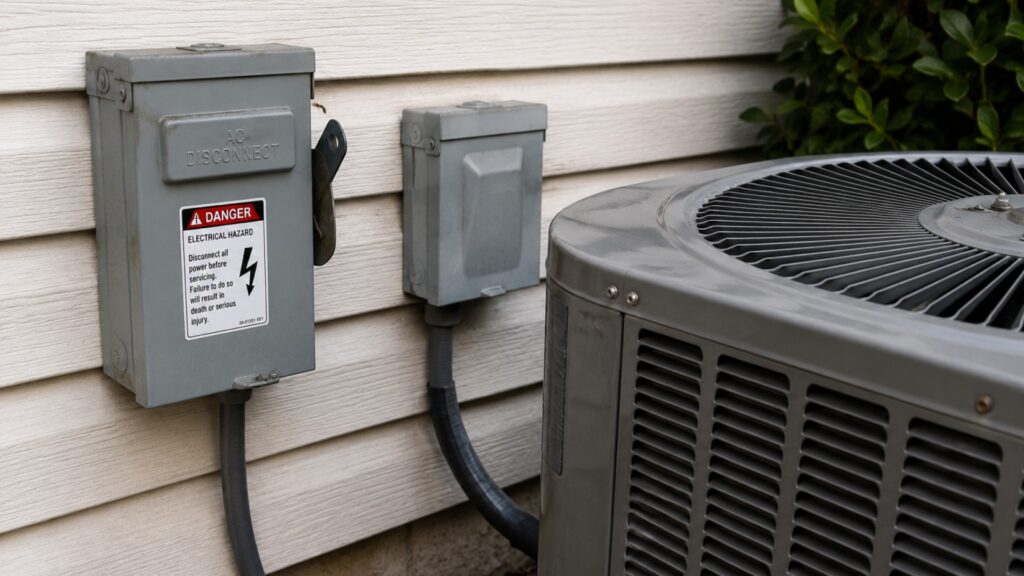
Outdoor AC Disconnect Box – Electrical Hazard Warning
Safety Rules Before You Do Anything
If your AC stops working after a storm, resist the urge to start investigating on your own. Electrical systems can hold dangerous charges even after power is cut, and surge-damaged components can behave unpredictably.
Follow these rules before you touch anything:
- Turn the system off at the thermostat first. Do not let it keep trying to start a damaged unit.
- Flip the breaker for your AC at the main electrical panel if you are comfortable locating it but do not open the panel cover or touch any wiring inside.
- Do not touch the outdoor disconnect box the gray box mounted near your condenser unit. Even with the system off, this box can carry dangerous voltage.
- Do not attempt to open the indoor air handler cabinet or inspect circuit boards yourself.
- If you smell burning, see scorch marks, or hear unusual sounds, leave the area and call a professional. Do not attempt to reset anything.
Your safety comes first. The AC can be repaired or replaced. You cannot.
Once you have confirmed there is no immediate danger, here are a few safe checks you can do yourself.
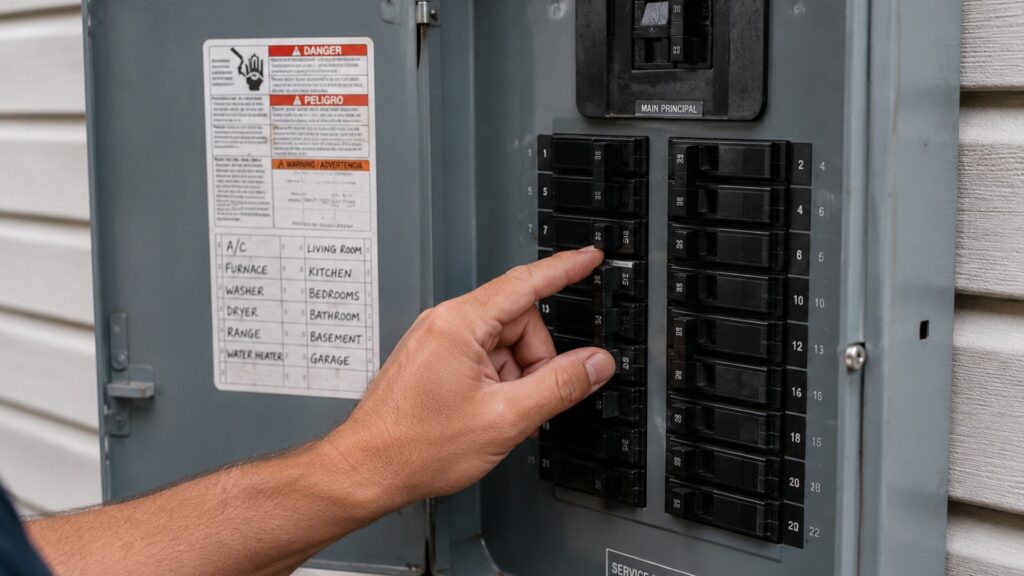
Residential Circuit Breaker Panel with Labeled Circuits
What You Can Check Safely
These will not fix surge damage, but they can help you rule out simpler causes and give your technician useful information.
1. Check the breaker panel. Look for a tripped breaker one that has flipped to the middle position between “on” and “off.” If you find one, reset it once. If it trips again immediately, stop and call a professional. A breaker that keeps tripping signals a deeper electrical problem.
2. Check the outdoor unit from a safe distance. Walk outside and look at the condenser unit. Look for any visible scorch marks, melted wiring, or debris that may have blown into the unit during the storm. Do not touch the unit or reach inside it.
3. Check your thermostat. If the display is blank or showing unusual error codes, try replacing the batteries. A surge can sometimes knock out a thermostat while leaving the rest of the system intact.
If the system still does not respond after these checks, it is time to call for a professional diagnostic.
Whole-Home Surge Protector Installed at Electrical Panel
The Solution: Whole-Home vs. Point-of-Use Surge Protection
Not all surge protection works the same way and the difference matters for your AC.
Plug-in surge protectors (the power strips you use for computers and televisions) are designed for small electronics on standard 120-volt outlets. Your central air conditioner runs on a dedicated 240-volt circuit and is hardwired directly into your electrical system. A standard power strip provides zero protection for your AC.
Whole-home surge protectors are installed directly at your main electrical panel by a licensed electrician or HVAC professional. They intercept large incoming surges before they reach any circuit in your home, including the dedicated line that powers your AC.
For maximum protection, the best approach combines both layers: a whole-home device at the panel to catch large external surges, and a dedicated HVAC surge protector installed at the outdoor disconnect box to catch any remaining voltage before it reaches your unit’s electronics. This two-layer approach is especially important for modern high-efficiency systems with variable-speed motors and advanced control boards, which are significantly more sensitive than older equipment.
Cost vs. Benefit: The Honest Math
A professionally installed whole-home surge protector typically costs $300 to $600, depending on your panel and the device selected.
A dedicated HVAC surge protector at the unit adds another $150 to $300 installed.
> The Honest Math:
> What You Risk vs. What Protection Costs Surge protection investment:
> – Whole-home surge protector (installed): $300–$600
> – Dedicated HVAC surge protector (installed): $150–$300
> – Total protection cost: $450–$900
> What surge damage can cost:
> – Control board replacement: $600–$1,200
> – Compressor replacement: $1,500–$4,000
> – Full system replacement: $5,000–$12,000
>The 10% Rule: If your surge protection costs less than 10% of replacing your AC system, it is a smart bet. For a $6,000 system, spending $600 or less on protection is money well spent.
Spending $500 now to protect a system worth $8,000 is the same logic as buying insurance for your car. The risk may not happen every year. But when it does, the cost without protection is far higher than the cost of the protection itself.
There is no pressure here. If your system is older and already showing signs of decline, the calculation looks different than it does for a brand-new high-efficiency unit. A good technician will help you weigh that honestly.
Why Maryland Homeowners Need to Think About This Now
Maryland’s summer storm season typically runs from late May through September. That window is when your AC is running hardest and when the grid is under the most stress from peak demand. Pepco, BGE, and Potomac Edison customers all face the same grid risks during peak summer demand.
Older homes throughout the Gaithersburg, Silver Spring, and surrounding areas were built before modern surge protection standards existed. Many have outdated panels that offer little defense against today’s surge risks. And as the region continues to see more intense storm activity, the number of surge-related HVAC failures each summer keeps climbing.
If you have not thought about surge protection before, now before the storms arrive is the right time to act. Retrofitting protection after a failure does not undo the damage. It only protects what is left.
How Rod Miller HVAC Can Help
At Rod Miller HVAC, surge protection is not a hard sell, it is a straightforward recommendation we make when it makes sense for your system and your home.
Our technicians can assess your current setup, identify whether your system has any existing protection, and recommend the right solution for your situation. We work with licensed electricians on panel-level installations, and we can install a dedicated HVAC surge protector at your outdoor unit during a routine maintenance visit.
We have been serving Maryland homeowners for over 50 years. Our goal is always to give you honest information so you can make a confident decision not to sell you something you do not need.
Ready to Stop Worrying About the Next Storm?
Summer storms in Maryland are not going away. But losing your AC to one of them is a problem you can prevent.
Contact Rod Miller HVAC today to schedule a surge protection consultation or add it to your next maintenance visit. We will take a look at your system, walk you through your options, and give you a straight answer on what makes sense for your home.
Call (301) 569-7993 or visit our About Us page to learn more.
##Frequently Asked Questions
###Can I install a surge protector myself?
Point-of-use surge strips are simple to plug in, but they do not protect your AC. Whole-home surge protectors and dedicated HVAC devices require licensed electrical work. Improper installation can void your system warranty and create a safety hazard. Always use a qualified professional for panel-level or hardwired installations.
###Will a surge protector save my AC if lightning strikes my house directly?
A direct strike to your home or a nearby utility pole produces an enormous surge, more than most consumer-grade devices are rated to handle completely. A surge protector significantly reduces the risk and may absorb enough of the spike to protect your electronics, but no device can guarantee full protection from a direct hit. What surge protectors do extremely well is defend against the far more common indirect surges that travel through the grid.
###How long does surge protector installation take?
A dedicated HVAC surge protector at your outdoor unit typically takes less than an hour to install during a service visit. A whole-home device at the electrical panel may take one to two hours depending on your panel’s layout and accessibility.
###Does my homeowner’s insurance cover surge damage to my AC?
Coverage varies by policy. Some policies cover sudden electrical damage; others exclude it or require a separate rider. Check with your insurance provider to understand your coverage and keep any repair invoices as documentation if you do need to file a claim.
###Does Rod Miller HVAC offer after-hours emergency service for surge-related AC failures?
Yes. If a storm knocks out your AC overnight or on a weekend, our team is available for emergency service calls throughout the Gaithersburg and Silver Spring areas. When you call, let us know what happened, including any storm activity, so our technician arrives prepared to assess surge damage and get your system back up as quickly as possible.