Maryland storms and utility work can trigger power surges that knock out your AC when you need it most. Even a brief overvoltage event can ruin a control board, thermostat, or inverter in modern heat pumps and mini-splits.
HVAC surge protection shields the most failure-prone, and most expensive, electronic components in your system. Your options include whole-house protection at the panel, a dedicated HVAC surge protector at the unit, or models that combine an AC disconnect with surge protection.
This guide explains how these protectors work, how to choose between 120V and 240V circuits, and what to expect regarding HVAC surge protector installation costs.
What is HVAC surge protection and how does it work?
Unlike standard power strips for small appliances, true HVAC surge protection is designed for hardwired equipment like central ACs, heat pumps, and furnaces. These systems utilize a Surge Protective Device (SPD) connected directly to your 120V or 240V power supply.
An SPD constantly monitors incoming voltage. When a surge, spike, or transient event occurs, the device acts instantly to divert excess voltage safely into your home’s grounding system.
This prevents damaging electricity from reaching sensitive circuit boards, thermostats, and inverter drives. Note that while these devices guard against high-voltage spikes, they are not designed to handle brownouts or total power outages.
There are three primary types of HVAC surge protectors:
- Hardwired units installed at the outdoor disconnect or indoor panel.
- Integrated AC disconnect boxes with built-in surge protection.
- Brand-specific kits tailored for certain HVAC models.
For the best results in Maryland’s single-phase residential systems, the device must be matched to your system’s voltage and installed close to the equipment with a solid ground connection.
What surges can damage in an AC, heat pump, or furnace
While a power surge can harm many parts of your HVAC system, the most expensive and sensitive electronics are at the highest risk. Repairing these components is often time-consuming and costly.
Key Components at Risk
The electronic controls that manage your system’s operation are the most vulnerable. Often, failure occurs after just one significant electrical spike:
- Control Boards: As the “brains” of your furnace or air handler, these manage safety switches, fan speeds, and system communication.
- Inverter & Variable-Speed Drives: Found in high-efficiency systems, these are particularly sensitive. A surge can disable the unit completely or lock it into a single, inefficient operating mode.
- Mechanical Parts: Contactors, capacitors, and compressor electronics are also at risk. Note that while an SPD protects against electrical spikes, it cannot prevent standard mechanical wear.
Mini-Split and System-Wide Effects
Ductless mini split systems require extra care because both the outdoor unit and each indoor head contain individual circuit boards. A single surge can render indoor blowers unresponsive or cause a total system failure.
Common signs of surge damage include:
- The unit is completely dead and will not start.
- The system displays flashing error codes or “ghost” malfunctions.
- Circuit breakers trip repeatedly when the unit tries to cycle on.
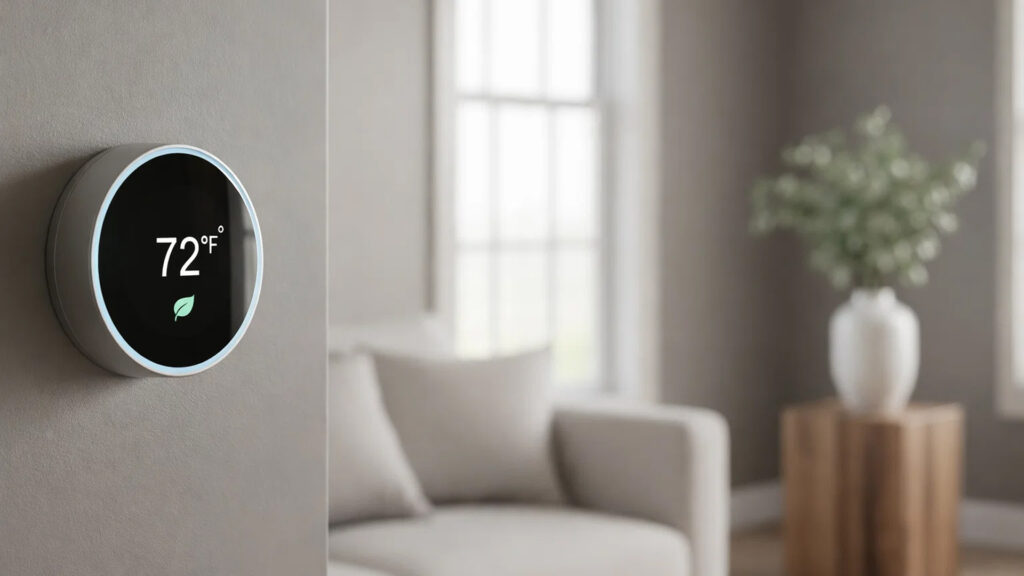
- The thermostat screen is blank or unresponsive.
When surge protection pays off most in Maryland properties
HVAC surge protection provides the highest value for homeowners with newer high-efficiency or variable-speed systems. Because these units rely on complex microprocessors, even a single spike can result in an expensive control board replacement.
Properties in storm-prone areas or those with overhead power lines are at elevated risk for electrical surges. For these homes, a surge protector offers a high return on investment by preventing catastrophic failures during Maryland’s summer storms.
Property managers also see significant benefits. By installing surge protection across multiple units, you can reduce emergency service calls, improve system uptime, and maintain more predictable maintenance budgets. Industry data indicates that surge protective devices can reduce equipment failure rates by nearly half, keeping tenants satisfied and lowering long-term costs.
If you are looking for the most cost-effective approach, we recommend protecting your most expensive HVAC components first. You can easily pair a surge protector installation with your routine maintenance visit. During this service, our technicians can identify grounding issues or worn components before they lead to a system shutdown.
Whole-house surge protector vs dedicated HVAC surge protector
Choosing between panel-based and equipment-level protection comes down to how much risk you want to eliminate.
| Feature | Whole-House Surge Protector | Dedicated HVAC Surge Protector |
| Installation | Main electrical panel | HVAC equipment disconnect |
| Scope | Covers all home circuits | Protects the connected HVAC unit |
| Primary Goal | Reduces large external surges | Protects specific, sensitive electronics |
| Best For | General, first-layer defense | High-efficiency and inverter systems |
Layered Protection for Best Results
For most modern, high-efficiency systems, layered protection isn’t optional, it’s the safest way to prevent board-level failures. The whole-house unit mitigates large surges from the grid, while the dedicated device at your AC or heat pump provides targeted protection for its most expensive components. While a panel protector might suffice for an older system, variable-speed equipment requires this layered approach to prevent expensive board failures and ensure smooth operation.
How to choose the right AC surge protector (specs that matter)
The first step in selecting a protector is matching the device’s voltage to your equipment. Most outdoor air conditioners operate on 240V circuits, while indoor furnaces or air handlers typically use 120V.
Type 1 vs Type 2 Surge Protection
Surge protective devices are classified by where they are installed:
- Type 1 SPDs: Mounted at the main electrical service panel to defend against external surges (like utility spikes).
- Type 2 SPDs: Installed at a sub-panel or the equipment disconnect to handle internal surges generated by other appliances in your home.
Key Specs and Product Features
When comparing models, look for these critical performance indicators:
- kA Surge Rating: A higher kA (kiloampere) rating means the device can safely divert larger electrical spikes.
- UL 1449 Listing: This ensures the device has been independently tested to meet the highest safety and performance standards for surge suppression.
- Enclosure Rating: For outdoor units, ensure the device has a weather-resistant rating (such as NEMA 3R).
- Indicator Lights: Look for clear status LEDs that confirm the device is active and alert you when it has sacrificed itself to save your system and needs replacement.
Warranty and Replacement Triggers
Check the manufacturer’s warranty for “connected equipment coverage,” which may help offset repair costs if the device fails to stop a surge. Always replace your surge protector immediately if the indicator light shows a failure; after a major event, its internal components are likely spent.
Where surge protectors install: condenser, air handler, panels
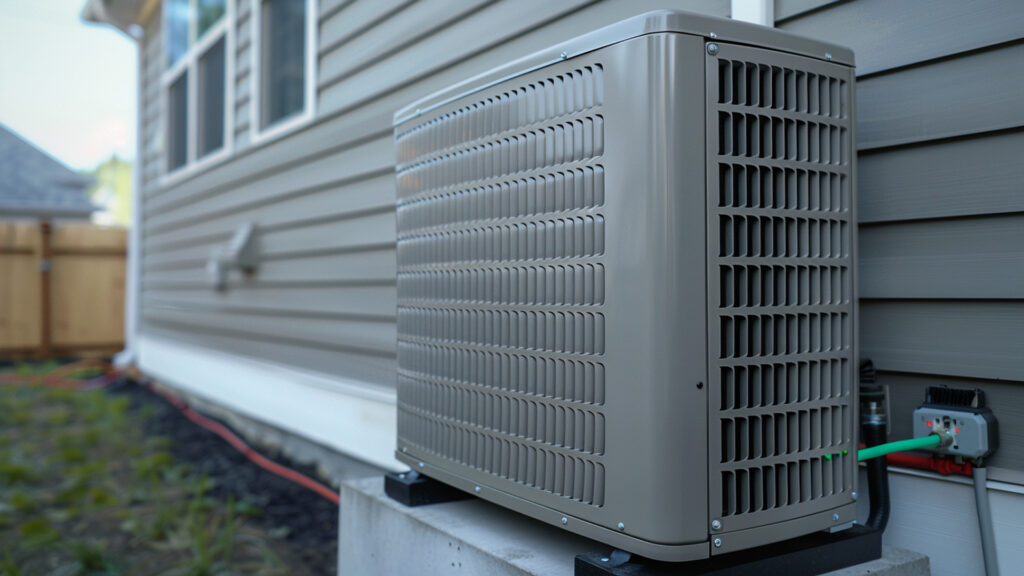
A surge protector is most effective when installed close to the equipment it protects. For outdoor air conditioners or heat pumps, the device is typically mounted at or near the unit’s disconnect box. Modern installations often utilize an integrated AC disconnect that has surge protection built directly into the box.
Indoor and Mini-Split Placement
- Furnaces & Air Handlers: Protectors are usually mounted at the control power circuit or near the main circuit board inside the unit.
- Mini-Splits: Because these systems are highly electronic, protection is often required at the outdoor unit’s power feed and, in some cases, at the communication/control lines for the indoor heads.
Coordination with Panel SPDs and Safe Practice
Combining equipment-level protection with a whole-house SPD at the main panel creates a comprehensive defense. To maximize effectiveness, connection wires should be kept as short as possible; this improves the device’s response time to a voltage spike.
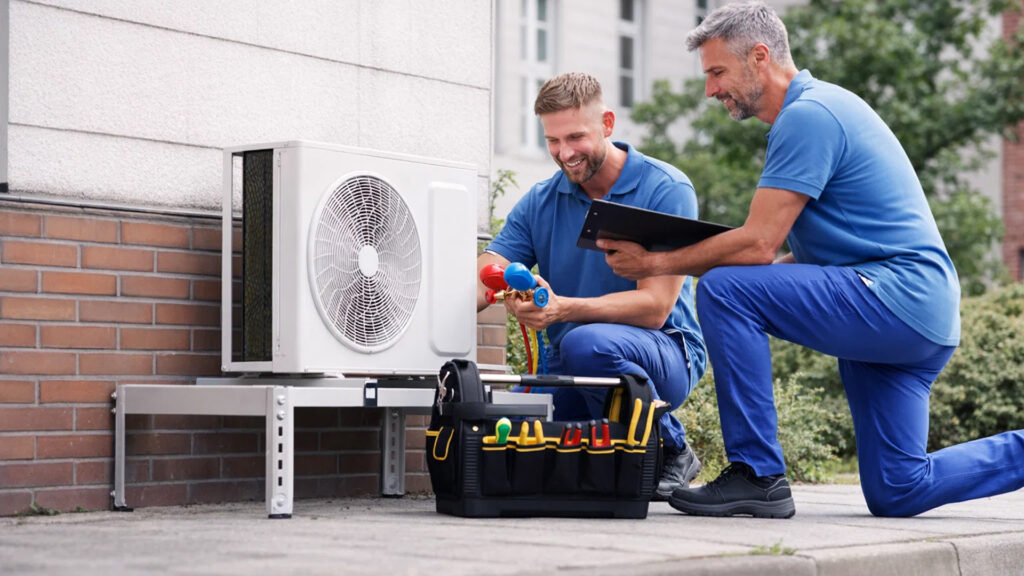
Safety Warning: Always follow local electrical codes and shut off all power before inspecting a surge protector. Because DIY HVAC repairs are dangerous, professional installation is recommended to ensure proper grounding and to maintain your system’s warranty.
HVAC surge protector installation cost in Maryland: ranges
Installation costs in Maryland vary based on device type and system complexity. For most homeowners, installing a dedicated HVAC surge protector for an AC unit, heat pump, or furnace typically costs between $250 and $600. A whole-house surge protector installation usually ranges from $400 to $900.
What Affects the Price?
Several factors can influence the total cost of the installation.
- Difficult access to the outdoor unit.
- The need for long wiring runs.
- Limited space in the electrical panel.
- The need to add a new AC disconnect with surge protection.
For property managers with multiple units, scheduling installations for several systems at once can often reduce the per-unit cost. Your quote should clearly outline the work planned for each system.
How to Compare Quotes
When you review a quote for a surge protector installation, make sure it includes the following details.
- The device’s specifications, including its kA rating and UL listing.
- A clear description of the labor scope and warranty coverage.
- Information about any testing or verification steps after the installation.
Clear documentation protects you if a warranty claim is ever needed and helps you compare future service recommendations. A local professional can help you balance the upfront HVAC surge protector cost with a longer HVAC system lifespan.

Mistakes to avoid when buying a surge protector for HVAC
Choosing the wrong protection can lead to a false sense of security and expensive repairs. Avoid these common pitfalls:
- Trusting Plug-in Power Strips: Standard power strips are for lamps and laptops. They cannot protect hardwired central ACs, heat pumps, or furnaces. You must use a device specifically rated for HVAC equipment.
- Mismatched Voltage: A 120V protector will not work for a 240V air conditioner. Always verify that the device matches your unit’s specific voltage requirements.
- Excessive Wire Length: Installing a protector too far from the equipment reduces its effectiveness. For peak performance, connection leads should be kept as short and straight as possible.
- Ignoring Grounding: A surge protector is only as good as its ground. Poor grounding or bonding can weaken the device’s performance or cause system shutdowns.
- Neglecting Replacement: Surge protectors are “sacrificial” devices—they can wear out after a major electrical event. Check the indicator lights regularly and replace the unit immediately if it shows a failure.
Get reliable surge protection installed and documented for your system
Power surges can drastically shorten the lifespan of expensive HVAC electronics—especially in modern air conditioners, heat pumps, and mini-split systems. The best way to defend your equipment is with a properly matched HVAC surge protector that features a high kA rating and a UL 1449 listing.
While installation costs vary based on your system’s layout, the investment pays for itself by preventing emergency calls and expensive board replacements. At Rod Miller, we’ve spent over 60 years helping Maryland homeowners protect their comfort. We don’t just install a device; we ensure your system is properly grounded and documented for long-term reliability.
Ready to protect your system from unexpected power surges and costly repairs? Request a service with our local team for a professional inspection and installation today.
Frequently asked questions about HVAC surge protection
1. Why is HVAC surge protection essential for modern systems?
HVAC surge protection is essential because today’s systems rely on advanced electronics and inverter-driven technology. A sudden voltage spike can act like a silent killer, causing irreparable damage to control boards, thermostats, and compressors. Without protection, your most expensive components are exposed at the exact moment a surge hits. A properly installed surge protection solution helps extend the life of your system and prevents costly emergency repairs.
2. Can a power surge really cause irreparable damage to HVAC equipment?
Yes. A single surge can exceed the voltage tolerance of sensitive HVAC equipment, destroying circuit boards instantly. In many cases, the damage is not repairable and requires full board replacement. Modern heat pumps and variable-speed systems are especially vulnerable. Surge protection acts as a buffer between your breaker box and the equipment, preventing that excess voltage from reaching critical components.
3. Is HVAC surge protection a perfect add-on to a whole-house surge protector?
It can be. A whole-house unit protects your general home appliances at the breaker box level, but a dedicated HVAC surge protector adds targeted defense at the equipment itself. For high-efficiency systems, this layered approach is often the perfect add-on because it protects the most expensive and sensitive electronics directly at the disconnect or unit.
4. What signs indicate I may need surge protection or troubleshooting after a storm?
If your system will not start, trips breakers repeatedly, or displays unusual error codes, surge-related damage may have occurred. These symptoms often require professional troubleshooting. A green LED on a surge protector confirms it is active. If that light is off, the device may need replacement. Always follow clear instructions from your technician when inspecting any electrical protection device.
5. Does HVAC surge protection help during extreme temperatures?
Surges during extreme temperatures are especially risky because your system is already working at peak capacity. A voltage spike during heavy summer or winter demand can disable your unit when you need it most. While surge protection does not prevent outages or brownouts, it supports your system by guarding against electrical spikes that often occur during severe weather events.
6. Is HVAC surge protection easy to install, or should a professional handle the job?
Although some models are marketed for easy installation, professional installation is strongly recommended. Proper grounding, short wire length, and correct placement near the breaker box or disconnect are critical for performance. An experienced technician ensures the device is matched to your voltage, verifies the green LED status light, and confirms the protection solution meets code requirements.
7. Will surge protection extend the lifespan of my HVAC system?
Yes. By preventing electrical spikes from damaging internal components, surge protection helps extend the operational life of your system. Customers who install protection early often avoid premature control board failures, especially in high-end systems with advanced technology. Protecting this valued equipment is far less expensive than replacing major components.
8. Is HVAC surge protection worth the purchase in today’s market?
In today’s market, HVAC systems contain more electronics than ever before. Replacement boards and inverter drives can exceed several hundred or even thousands of dollars. For most homeowners, surge protection is a quality investment that protects more valued equipment from becoming unprotected during storms, utility work, or internal electrical events. When compared to repair costs, the purchase typically pays for itself after preventing just one surge-related failure.